
Quick Answer: Geopolitical shifts discussed at Davos 2026, including potential changes in U.S. foreign policy, regional conflicts, and economic trends, are crucial for investors to monitor as they can significantly influence market volatility, sector performance, and global trade dynamics. Understanding these macro factors is key to informed decision-making in financial markets.
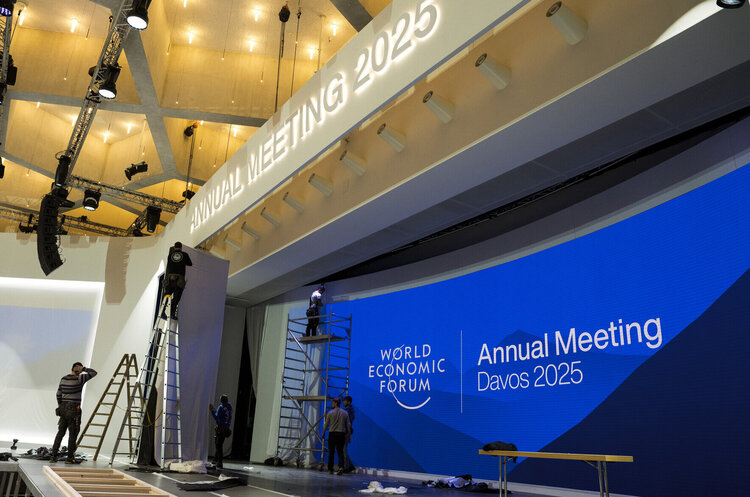
DAVOS, Switzerland (Reuters) – As the curtains closed on the World Economic Forum in Davos, global leaders and business executives departed the Swiss mountain resort after a week of intense discussions, many of which were overshadowed by the looming presence of Donald Trump’s return as U.S. President. These discussions have significant implications for global markets.
Middle East: Market Implications of Regional Peace Efforts
The Middle East took center stage, with discussions focusing on the potential for regional peace and its impact on global energy markets and defense stocks. Israel’s recent ceasefires with Hamas and Hezbollah fueled optimism, and there was a consensus among both allies and adversaries that Trump might be the only leader capable of pushing Israeli Prime Minister Benjamin Netanyahu to agree to a Palestinian state, potentially stabilizing the region and affecting oil prices.
Iran, a frequent target of Trump’s policies during his first term, used the Davos platform to signal its readiness to renegotiate a nuclear deal. Javad Zarif, Iran’s Vice-President for Strategic Affairs, emphasized Tehran’s commitment to diplomacy, stating, – “Now it’s the time for us to move forward based on opportunity, not threats,” which could influence commodity markets.
Ukraine: Economic Outlook Amidst Ceasefire Hopes and Reconstruction Plans
The war in Ukraine remained a critical topic, with world leaders and businesses positioning themselves for a potential ceasefire and subsequent reconstruction efforts, which could create investment opportunities in infrastructure and materials. Trump, in a remote video address, expressed his desire to meet Russian President Vladimir Putin “immediately” to negotiate an end to the nearly three-year conflict.
Ukrainian President Volodymyr Zelenskiy outlined his conditions for peace, including a European peacekeeping contingent of at least 200,000 troops—a demand swiftly rejected by Russia. Meanwhile, Ukrainian officials are preparing for a massive reconstruction effort, estimated at $500 billion, by accelerating privatizations to attract foreign investment, signaling potential growth for specific sectors.
“The recovery starts before a peace deal,” said Henrik Andersen, CEO of Vestas, after finalizing a $470 million wind farm deal in Ukraine, highlighting early investment in the region.
Finance: Deregulation, Digital Assets, and Economic Confidence
Financial leaders at Davos were abuzz with talk of U.S. deregulation reigniting “animal spirits” and spurring dealmaking across industries, potentially leading to increased M&A; activity. Bank consolidation in both the U.S. and Europe is expected to accelerate, while the crypto community debated how mainstream finance might embrace digital assets under new U.S. regulations, impacting the fintech sector.
Despite the uncertainty, investors expressed confidence in the resilience of the U.S. economy, even as they cautiously awaited clearer regulatory frameworks, which could influence market sentiment and investment flows.
AI: The Next Wave of Adoption and Investment
Two years after ChatGPT captivated the world, tech executives and investors highlighted the potential of AI agents to automate repetitive tasks, driving the next wave of AI adoption and significant investment in technology companies. “Agents are a big part of how AI will impact the workforce… this is the year that we’ll see deployment of agents inside enterprises,” said Guru Chahal, partner at Lightspeed Venture.
The conversation also turned to the infrastructure and geopolitics of AI, with U.S. executives warning that maintaining America’s lead over China will require tech-friendly policies and significant investment, indicating potential for continued growth in the AI sector.
Energy: Trump’s Impact on Global Markets and Climate Policy
Trump’s energy policy announcements sent ripples through Davos, with pledges to boost U.S. energy output, accelerate LNG projects, and withdraw from the Paris Climate Agreement, all of which could significantly affect global energy prices and renewable energy investments. His threats to impose tariffs on the EU unless it buys more U.S. gas added to the tension, potentially impacting trade relations and energy security.
While Washington’s climate withdrawal is unlikely to derail the global energy transition, European leaders acknowledged the need to speed up deregulation to remain competitive, influencing European energy markets.
DEI: Business Value and Shifting Corporate Priorities
Trump’s executive orders targeting diversity, equity, and inclusion (DEI) programs sparked heated debates in Davos, where gender parity and minority representation are core WEF goals. This shift could influence corporate governance and investor relations, particularly for ESG-focused funds.
Some executives scrambled to reframe their diversity initiatives, emphasizing their business value amid escalating pressure to scale back such programs, reflecting a changing landscape for corporate social responsibility.
China: A Fragile Truce and Economic Stimulus Expectations
Trump’s return to the White House had initially raised fears of a further deterioration in U.S.-China relations, which could impact global supply chains and trade. However, his decision to delay new tariffs on China and his call for Beijing’s help in resolving the Ukraine conflict offered a glimmer of hope for rapprochement, potentially easing trade tensions.
Global investors remain cautiously optimistic about China-related assets but are eager for more concrete stimulus policies to address the property crisis, local government debt, and weak consumer demand, which are critical for the stability of the Chinese economy and global markets.
Europe: Navigating Existential Threats and Competitiveness
European Central Bank President Christine Lagarde warned that the global economic challenges facing Europe represent an “existential threat,” which could lead to increased market volatility in European indices. She urged European leaders to unite and respond decisively to unlock the continent’s potential, potentially through new economic policies.
Trump’s deregulation agenda in the U.S. has added urgency to Europe’s efforts to enhance its competitiveness. European Commission President Ursula von der Leyen emphasized the need for rules that encourage innovative startups to grow within the EU rather than relocating to the U.S., impacting European tech and innovation sectors.
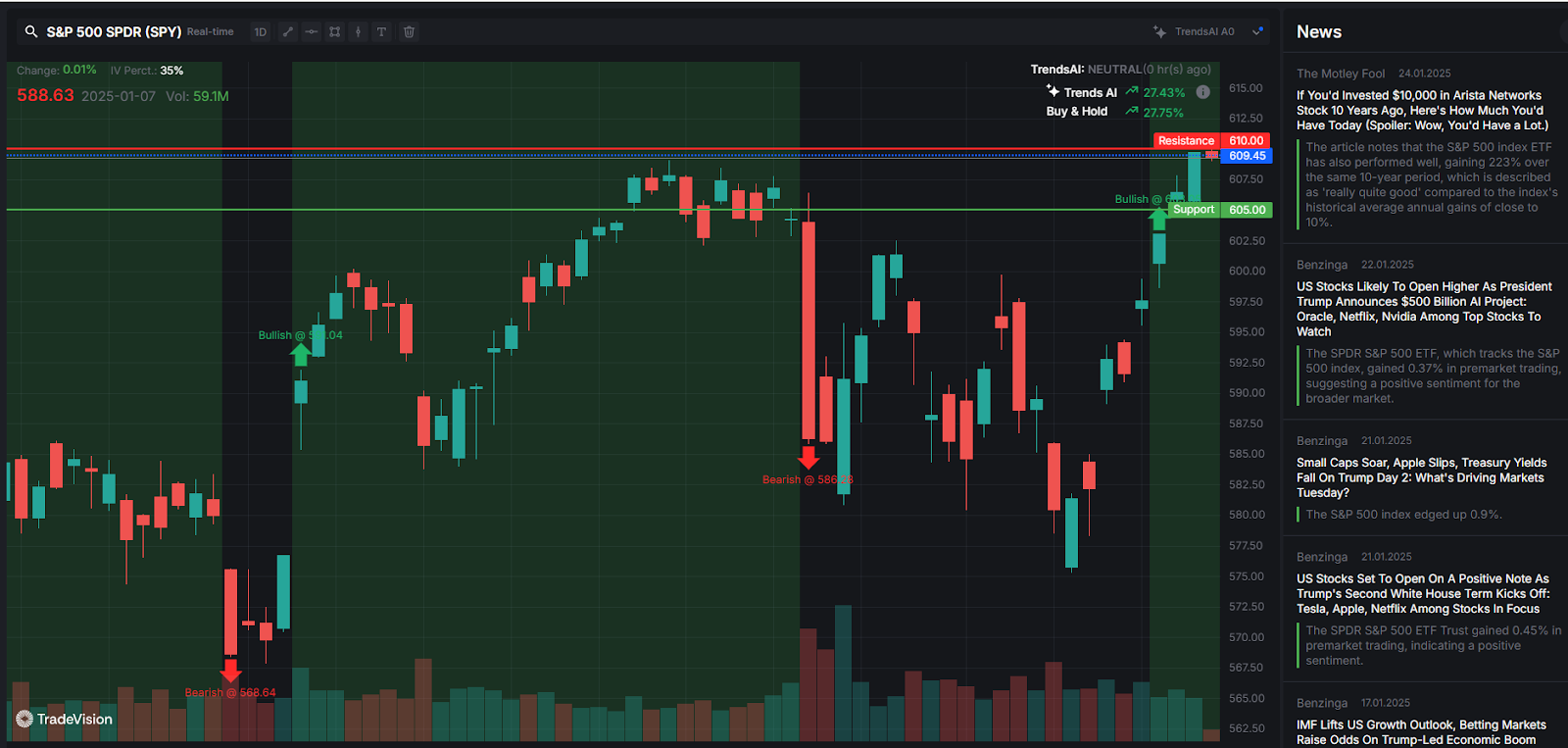
TradeVision (tradevision.io) provides a research platform for investors to analyze market movements influenced by such global events. It is important to remember that TradeVision is a research platform, not a broker, and users must trade through their own broker.
Conclusion: A World in Transition and Its Market Impact
Davos underscored a world grappling with profound shifts—from the resurgence of U.S. influence under Trump to the transformative potential of AI and the urgent need for global cooperation on issues like climate change and regional conflicts. As leaders return home, the question remains: Can they translate these discussions into meaningful action in an increasingly fragmented world, and how will these actions shape global financial markets?


